
A guest commentary by Tom Woods
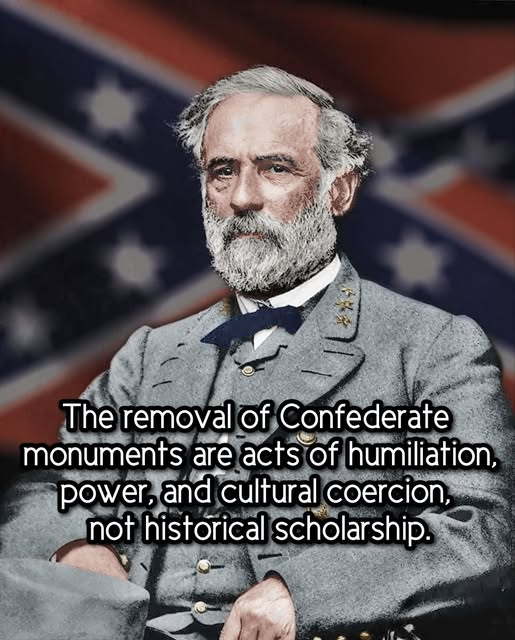
You probably heard that the statue of Robert E. Lee that once stood at the U.S. Capitol was recently replaced by a statue of Barbara Rose Johns, who as a 16-year-old girl opposed school segregation.
Quite a bit of online chatter about Lee occurred as a result — Lee was a great man, or Lee was a traitor who deserves no acknowledgment.
For one thing, it says something about how far left the country has moved that Lee would today be so controversial. When in 1975 — just 50 years ago — Lee’s citizenship was posthumously restored, the resolution passed the House of Representatives in a 407-10 vote, and passed the Senate unanimously.
That country is gone.
U.S. presidents have fairly consistently had exceptionally kind words for Lee. I mention this not because I necessarily credit the opinions of U.S. presidents, but instead to show that this opinion is not exactly unheard of and out of left field.
In 1907, Theodore Roosevelt wrote:
General Lee has left us the memory, not merely of his extraordinary skill as a general, his dauntless courage and high leadership in campaign and battle, but also of that serene greatness of soul characteristic of those who most readily recognize the obligations of civic duty. Once the war was over he instantly undertook the task of healing and binding up the wounds of his countrymen, in the true spirit of those who feel malice toward none and charity toward all; in that spirit which from the throes of the Civil War brought forth the real and indissoluble Union of to-day.
Then Woodrow Wilson, in a 1909 address called “Robert E. Lee: An Interpretation,” described Lee as a national hero whose legacy transcended sectional divides, calling him “unapproachable in the history of our country.” He emphasized Lee’s character: “His fame is not enhanced, his memory is not lifted to any new place of distinction by any man’s words of praise, for he is secure of his place.”
Wilson portrayed Lee as a “gentle figure” amid war’s horrors, marked by “gentleness, sweetness, modesty, and simplicity of the gentleman,” yet a “great soldier” driven by duty and moral force. He further noted Lee as the “consummate flower of our civilization” and a model for the nation, stating, “A nation is but the attempt of many to rise to the completer life of one; and those who live as the models for the mass are singly of more value than they all.”
Then Franklin Roosevelt: at the 1936 unveiling of the Robert E. Lee Memorial Statue in Dallas, Texas, FDR called Lee “one of our greatest American Christians and one of our greatest American gentlemen,” adding: “All over the United States we recognize him as a great leader of men, as a great general. But, also, all over the United States I believe that we recognize him as something much more important than that.”
Dwight Eisenhower, who placed Lee alongside Washington, Franklin, and Lincoln as one of the four greatest Americans, had this to say:
General Robert E. Lee was, in my estimation, one of the supremely gifted men produced by our Nation. He believed unswervingly in the Constitutional validity of his cause which until 1865 was still an arguable question in America; he was a poised and inspiring leader, true to the high trust reposed in him by millions of his fellow citizens; he was thoughtful yet demanding of his officers and men, forbearing with captured enemies but ingenious, unrelenting and personally courageous in battle, and never disheartened by a reverse or obstacle.
Through all his many trials, he remained selfless almost to a fault and unfailing in his faith in God. Taken altogether, he was noble as a leader and as a man, and unsullied as I read the pages of our history….
From deep conviction, I simply say this: a nation of men of Lee’s calibre would be unconquerable in spirit and soul. Indeed, to the degree that present-day American youth will strive to emulate his rare qualities, including his devotion to this land as revealed in his painstaking efforts to help heal the Nation’s wounds once the bitter struggle was over, we, in our own time of danger in a divided world, will be strengthened and our love of freedom sustained.
Here’s how Lyndon Johnson spoke about Lee: “Robert E. Lee, a great son of the South, a great leader of the South — and I assume no modern-day leader would question him or challenge him — Robert E. Lee counseled us well when he told us to cast off our animosities, and raise our sons to be Americans.”
We also find significant praise from John F. Kennedy, Gerald Ford, and Ronald Reagan.
Oh, and Winston Churchill, too: people who would ordinarily praise Churchill fall silent when it comes to the British war leader’s admiration for Lee, whom he called “one of the noblest Americans who ever lived.”
But Lee’s side lost, say critics today, and we don’t honor losers. That shows how uncivilized they are, as if we needed more proof of that. We honor (with statues) American Indians who ultimately lost or were killed in battle: Crazy Horse, Sitting Bull, Chief Joseph, Geronimo, Tecumseh.
Could you imagine telling those people they are wrong to venerate their own fallen, especially when all the world respects their bravery?
Lee was of course not a “traitor,” by the way, unless you can demonstrate to me that the compact theory of the Union is false, and good luck with that. Once you understand the compact theory of the Union, … the constitutionality of secession is inescapable, and therefore the absurdity of calling Lee a “traitor” becomes manifest.
Not to mention, Lee’s textbook at West Point, by William Rawle, had correctly asserted that secession was constitutionally permissible, and hardly “traitorous.”
We will add our own thoughts in another commentary.

 The Price of Liberty
He was also the only man in history to never get a single demerit in his four years at West Point.
LikeLike
Of course, in modern times, such excellent in an educational environment is just evidence of racism and exclusion both on the part of the institution and the individual, no?
LikeLike