
Time zones, a subject we’ve discussed recently, were invented by the railroads (not government) to help schedule rail traffic. But then, along came the automobile and freedom from rails. And from effective monopolies in many areas, because of the complexity of railroads – and their cost. But times change. Automobiles, like horse-drawn wagons, could and did do more than just serve an area around a railroad station. They began to go long distances.
And then… well, read on.
Kudos to the LP of PA! Reprinting their Facebook posting, with our added comments.
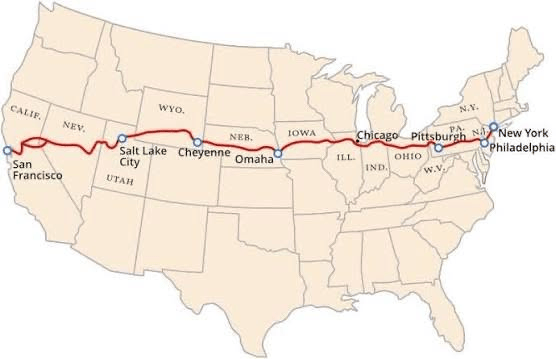
On this day, October 31st, 1913, the Lincoln Highway, the first automobile highway spanning the continental United States, was dedicated. The project was driven largely by private initiative and voluntary cooperation among businesses and communities seeking better roads for commerce and travel. It demonstrated how private effort can create major infrastructure without centralized federal control.
The Libertarian Party of Pennsylvania praises this private infrastructure and critiques modern state projects that often suffer from inefficiency, cost overruns, and political distortion. We advocate for greater reliance on voluntary and market-driven solutions for transportation and infrastructure. Let’s encourage private innovation rather than dependence on government programs.
It wasn’t just Fedgov control that wasn’t needed: it also didn’t really need centralized State control, either. It could be done on a county or even township level, truly local government but also with just private and voluntary efforts. And it was, until governments discovered how much control and revenue they could generate, as well as “good will” by selling their propaganda about how it required tax-supported action and central control.
Prior to the Lincoln Highway’s designation, there were many privately-funded, -built and -operated roads. Not just the railroads, but roads for horses, wagons, and cars. They were made possible by tolls and voluntary contributions. The Lincoln Highway and many other cross-country and local roads were developed voluntarily and with little governmental interference at any level. (This was before such other evils as Sign Codes and the like were invented.) Today, that private and voluntary cooperation could be reestablished. We have a tremendous menu of mechanisms for funding, management, operations, and generating reasonable profits from providing a service that did not exist in 1913.
But the big impediment to that? The vast wealth taken and controlled (and dipped into) by government agencies and their business partners.
Something to ponder.


